
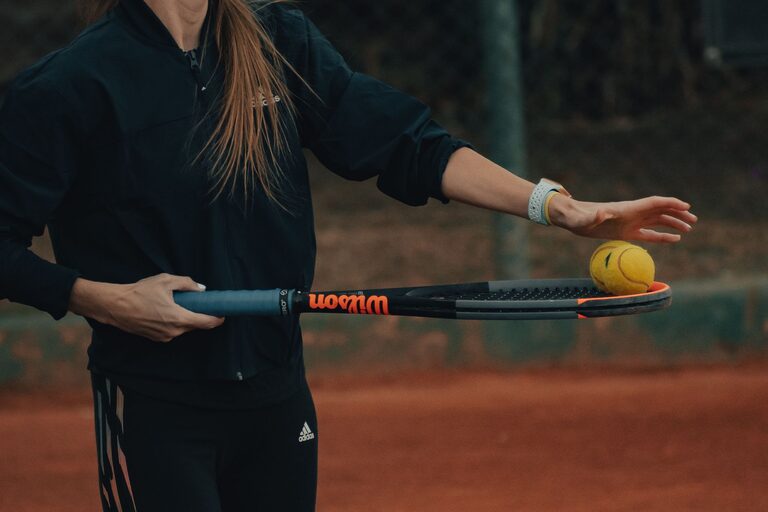

Tennis places repeated demands on the shoulders. Serving, hitting overheads, and reaching for wide balls all require a combination of mobility, stability, and control. When the shoulder moves well, players can swing more freely and maintain better posture throughout a match.
Mobility drills can help prepare the shoulders for play and support smoother movement during training. They are not a replacement for strength work or technical coaching, but they can be a useful part of a balanced tennis routine.
This guide covers practical drills that can be performed before practice, after a session, or on a separate mobility day.
Why Shoulder Mobility Matters in Tennis
The shoulder is designed to move in many directions. Tennis strokes use several of those movements at once, including:
– Raising the arm overhead
– Rotating the upper arm inward and outward
– Reaching across the body
– Moving the shoulder blades up, down, and around the rib cage
– Maintaining control while the arm moves quickly
Limited mobility in one area can cause a player to compensate elsewhere. For example, a stiff upper back may make it harder to reach an ideal serving position, encouraging extra movement from the lower back or elbow.
Good shoulder mobility is more than simply being able to stretch farther. It also involves control. The goal is to move through a comfortable range while keeping the shoulder blades, ribs, and spine in a stable position.
How to Use These Drills
Use slow, controlled movements rather than forcing a stretch. Mobility work should feel active and purposeful, not painful.
A simple approach is:
– Perform five to eight minutes before tennis as part of your warm-up.
– Use dynamic drills before play.
– Save longer, relaxed stretches for after practice or a separate session.
– Complete one to two sets of each exercise.
– Breathe steadily throughout every movement.
If a drill causes sharp pain, numbness, tingling, or unusual weakness, stop the exercise. A qualified health or fitness professional can help identify suitable alternatives.
1. Shoulder Rolls
Shoulder rolls are an easy way to begin. They gently move the shoulders through elevation, retraction, and depression while helping you notice areas that feel stiff.
How to do them
- Stand tall with your arms relaxed by your sides.
- Slowly lift both shoulders toward your ears.
- Move them back and down in a smooth circle.
- Complete eight to 10 repetitions.
- Repeat in the opposite direction.
Keep your neck relaxed and avoid rushing. The movement should come from the shoulders and shoulder blades rather than from bending the elbows.
2. Wall Slides
Wall slides encourage overhead movement while helping you maintain an upright posture. They are especially useful for players who spend long periods sitting or using a rounded upper-back position.
How to do them
- Stand with your back against a wall.
- Place your feet a short distance forward.
- Keep your ribs gently down and your chin relaxed.
- Bend your elbows to about 90 degrees, with the backs of your hands near the wall.
- Slowly slide your arms upward as far as comfortable.
- Lower them with control.
- Repeat six to 10 times.
Do not force your hands or elbows against the wall. If your back arches or your shoulders shrug, reduce the range of motion.
3. Open Book Rotations
Although this drill focuses on the upper back, it can support better shoulder movement. A mobile upper spine gives the shoulders a stronger base for rotation during serves and groundstrokes.
How to do them
- Lie on your side with your knees bent and stacked.
- Extend both arms straight in front of you.
- Keep your knees together as you slowly rotate your top arm and chest away from the floor.
- Follow your hand with your eyes.
- Return to the starting position.
- Perform six to eight repetitions per side.
Move only as far as you can without allowing your knees to separate. Breathe out as you rotate and breathe in as you return.
4. Banded Shoulder External Rotations
This drill combines mobility with light control. It can help players become more comfortable with the outward rotation used in the preparation and acceleration phases of an overhead stroke.
How to do them
- Attach a light resistance band at about elbow height.
- Stand sideways to the anchor point.
- Hold the band with the arm farthest from the anchor.
- Bend your elbow to 90 degrees and keep it close to your side.
- Rotate your forearm away from your body.
- Slowly return to the starting position.
- Complete eight to 12 repetitions per side.
Use very light resistance. Keep your upper arm still and avoid twisting your torso to create extra movement.
5. Banded Shoulder Internal Rotations
Internal rotation is another important part of tennis movement. This drill is the opposite of the previous exercise and should be performed with the same controlled tempo.
How to do them
- Stand sideways with the working arm closest to the band anchor.
- Hold the band with your elbow bent at 90 degrees.
- Keep your elbow near your side.
- Pull your forearm across your body.
- Return slowly to the starting position.
- Perform eight to 12 repetitions per side.
Keep the shoulder relaxed. The movement should be generated by the upper arm rotating, not by pulling the elbow forward.
6. Quadruped Shoulder Circles
This floor-based drill challenges shoulder movement while encouraging control through the hands, arms, and upper back.
How to do them
- Start on your hands and knees with your hands under your shoulders.
- Keep your spine in a comfortable neutral position.
- Lift one hand from the floor.
- Make a slow circle with that arm, reaching forward, out to the side, and back toward your hip.
- Return the hand to the floor.
- Complete four to six circles in each direction per side.
Keep your hips as steady as possible. If the movement feels too difficult, make smaller circles or place your knees slightly wider for additional balance.
7. Arm Swings
Arm swings are a simple dynamic option before practice. They gradually increase movement without holding the shoulder in one position for too long.
How to do them
- Stand with your feet about hip-width apart.
- Swing both arms forward and backward in a relaxed manner.
- Gradually increase the range of motion.
- Continue for 20 to 30 seconds.
- Cross the arms gently in front of your chest for another 20 seconds.
Avoid using force or swinging into discomfort. The purpose is to prepare the shoulders, not to create an intense stretch.
Building a Tennis-Specific Mobility Routine
A practical pre-tennis sequence might look like this:
- Shoulder rolls: 10 repetitions in each direction
- Arm swings: 30 seconds
- Wall slides: 8 repetitions
- Open book rotations: 6 per side
- Light banded rotations: 8 per side
- Easy groundstrokes and practice serves
Start with general movements and gradually progress toward tennis-specific actions. This allows the body to warm up before faster swings and overhead work.
Mobility Is Only One Part of Shoulder Care
Mobility drills work best when combined with other habits. Tennis players should also include appropriate strength training, a gradual increase in serving volume, and regular breaks during long sessions.
Pay attention to movement quality as well. A controlled swing, balanced follow-through, and efficient footwork can reduce unnecessary strain on the upper body. Mobility work cannot correct every technical issue, but it can help you move with greater awareness.
Consistency is more useful than intensity. A few minutes several times per week can be easier to maintain than a long session performed only occasionally. Keep the movements comfortable, focus on control, and adjust the routine as your training schedule changes.