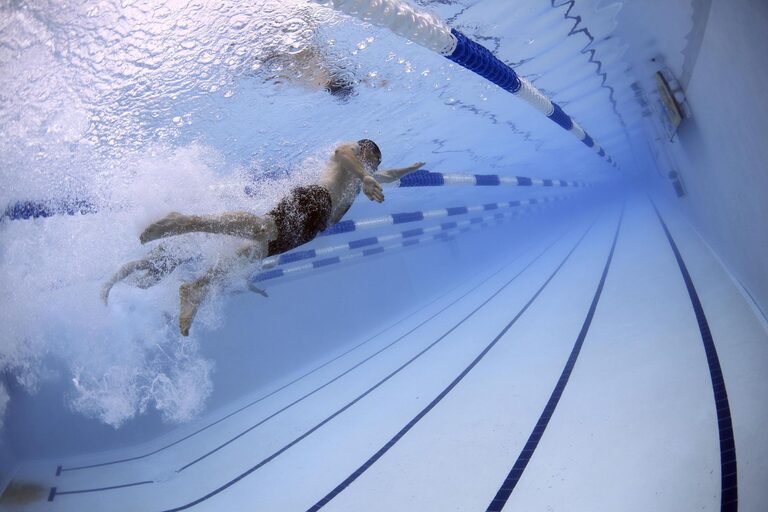

Swimming is known for being a low impact form of exercise, but that does not mean it builds every type of strength automatically. Strong strokes require control from the shoulders, back, core, hips, and legs. Swimmers can develop these areas in the pool by using water resistance, body position, and slow, deliberate movements.
Pool-based strength work can be especially useful for swimmers who want to reduce pounding on the joints while still challenging their muscles. The water supports much of the body weight, while its resistance surrounds every movement. This creates a smooth form of resistance that can be adjusted simply by changing speed, hand position, or the size of a movement.
Why the Pool Works for Strength Training
Water provides two helpful training features: buoyancy and resistance.
Buoyancy reduces the effects of gravity, which can make movements feel more comfortable than similar exercises performed on land. This is useful during recovery days, technique sessions, or workouts focused on controlled strength.
At the same time, water pushes against the body in every direction. Moving slowly through the water creates steady resistance without the need for heavy equipment. Moving faster can increase the challenge, while smaller movements can help you focus on control.
The pool also encourages swimmers to maintain balance. Because the water constantly shifts around the body, the muscles of the trunk and hips must work to keep the body aligned.
Start With a Simple Warm-Up
Before strength work, spend five to ten minutes warming up. Begin with easy swimming or water walking, then add gentle movements that prepare the major muscle groups.
Try the following:
– Easy freestyle or backstroke
– Walking forward and backward in waist- to chest-deep water
– Arm circles with relaxed shoulders
– Gentle side steps
– Slow knee lifts
– Light kicking while holding the pool edge
The goal is to increase movement quality, not to create fatigue. Use this time to notice how your shoulders, hips, knees, and ankles feel. If a movement causes sharp pain, stop and choose a gentler option.
Pool Exercises for Upper-Body Strength
1. Water Pushes
Stand in chest-deep water with your feet about hip-width apart. Hold your hands in front of your chest, palms facing forward. Slowly push both hands forward, then sweep them back toward your body.
Repeat for 10 to 15 controlled repetitions.
To change the challenge, turn your palms sideways or make the movement wider. Keep your shoulders relaxed and avoid shrugging. This exercise trains the chest, shoulders, upper back, and arms while also requiring core control.
2. Arm Presses
Stand tall with your arms at your sides and palms facing backward. Press both hands down through the water until your arms are straight, then return slowly to the starting position.
Complete 10 to 15 repetitions.
Keep your ribs stacked over your hips and avoid leaning forward. The slower return phase is important because the water continues to resist your arms as they rise.
3. Sculling Holds
Sculling is a familiar swimming skill that can also build shoulder and upper-back endurance. Float on your back or stand in shallow water. Hold your arms slightly away from your body and make small, alternating movements with your hands.
Keep the motions compact and steady. Perform two or three rounds of 20 to 30 seconds. Focus on relaxed shoulders and a stable body position rather than trying to move a large amount of water.
Pool Exercises for the Core and Hips
A strong core helps swimmers maintain a streamlined position and transfer force between the upper and lower body. In the pool, core exercises should emphasize balance and control instead of fast twisting.
1. Supported Knee Lifts
Stand near the pool wall and hold it lightly with one hand. Lift one knee toward your chest, then lower it slowly. Alternate legs for 10 to 12 repetitions per side.
For more challenge, let go of the wall or perform the exercise without holding on. Keep your upper body tall and avoid swinging your leg.
2. Standing Leg Presses
Stand in chest-deep water and extend one leg straight behind you. Press the leg backward against the water, then return it slowly. Complete 10 to 15 repetitions before switching sides.
This movement targets the hips and back of the legs. Keep the pelvis facing forward and use a range of motion that allows you to remain balanced.
3. Streamline Balance
Push gently away from the wall and hold a streamlined position. Keep your arms extended overhead, your head relaxed, and your body long. Hold for 10 to 20 seconds, then rest.
Repeat three to five times. If maintaining a full streamline is difficult, keep your arms in front of your chest instead. The aim is to develop body awareness and trunk control without straining the shoulders.
Pool Exercises for the Legs
The legs contribute to propulsion, balance, and body position in every swimming stroke. Water-based leg exercises can challenge the hips and thighs while limiting impact.
1. Water Squats
Stand with your feet slightly wider than your hips. Lower into a comfortable squat, then press through your feet to stand tall. Perform 10 to 15 repetitions.
Keep your knees pointing in the same direction as your toes. Use the depth of the water to adjust difficulty. Deeper water usually reduces the load, while shallower water allows more weight to pass through the legs.
2. Side Leg Lifts
Hold the pool wall lightly and lift one leg out to the side. Return it slowly without leaning your torso. Perform 10 to 15 repetitions per side.
This exercise works the muscles around the hips, which help support stable kicking and body alignment.
3. Controlled Leg Swings
Stand tall and hold the wall. Swing one leg forward and backward through a comfortable range. Keep the motion smooth and avoid forcing the leg high.
Perform 10 swings, then switch sides. These are best used as controlled mobility and activation work, not as fast ballistic movements.
Use Equipment Without Losing Control
Simple pool equipment can increase resistance, but it is not required. Hand paddles, water dumbbells, pull buoys, and kickboards can all change how the body moves through the water.
Use equipment gradually. Large paddles or dumbbells may place extra demand on the shoulders, especially when used with fast movements. Start with short sets and focus on smooth technique. If your stroke becomes strained or your posture changes, reduce the resistance or remove the equipment.
A kickboard can also be used for more than kicking. Hold it vertically in front of your body and press it through the water while walking. This creates resistance for the arms and trunk without requiring a complicated exercise.
Build a Balanced Pool Workout
A joint-friendly strength session does not need to be long. Try this sample structure:
– Warm up for 5 to 10 minutes
– Complete 2 rounds of upper-body exercises
– Complete 2 rounds of core and hip exercises
– Complete 2 rounds of leg exercises
– Finish with 5 minutes of easy swimming or walking
Aim for 8 to 15 repetitions per exercise, or work for 20 to 40 seconds. Rest long enough to maintain good form. One or two pool strength sessions each week can complement regular swim training.
Technique and Safety Tips
Joint-friendly does not mean effort-free. Good technique remains important.
Keep these guidelines in mind:
– Move slowly enough to stay in control.
– Maintain a comfortable range of motion.
– Keep your shoulders away from your ears.
– Avoid locking your knees or elbows.
– Use the pool wall for balance when needed.
– Stop if you feel sharp, sudden, or worsening pain.
– Increase only one training factor at a time, such as duration, speed, or resistance.
If you are returning from an injury or have a condition that affects movement, ask a qualified fitness professional for exercise modifications.
Make Strength Support Your Swimming
Pool strength training works best when it supports your main swimming goals. Swimmers focused on endurance may use longer, easier sets with steady movements. Those working on power can add short bursts of faster resistance work while keeping technique clean.
The key is consistency. By combining water resistance, balanced exercises, and controlled movement, swimmers can build useful strength while keeping training smooth and joint-conscious. Over time, these sessions may help improve body control, stroke stability, and confidence in the water.